 Express Products
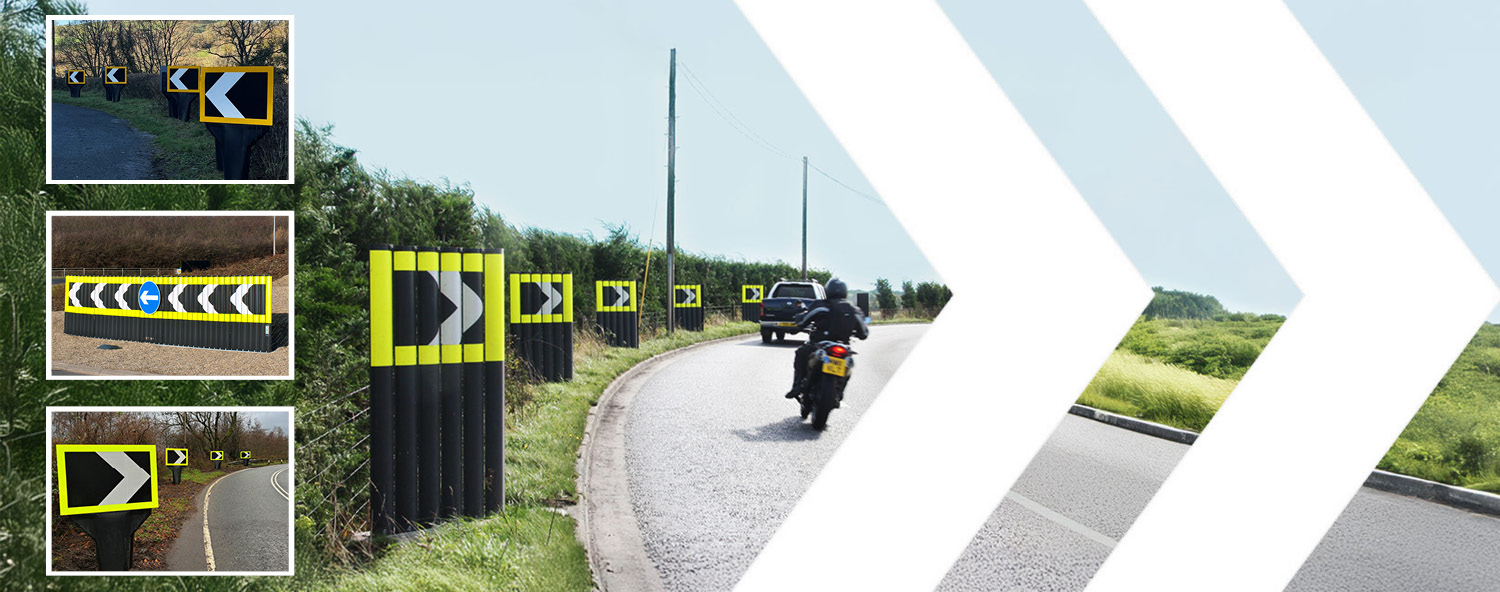
In the world of road safety, selecting the right equipment is crucial for ensuring the well-being of both motorists and pedestrians. One of the key elements in this decision-making process is choosing the appropriate chevron road safety sign.
What is a Chevron?
In the Traffic Signs Regulations and General Directions, chevrons are designated Diagram numbers 515, 515.1 and 515.1A and are used to ‘mark a sharp deviation of route.’
Due to this, chevrons are typically used at locations where the risk of vehicles leaving the carriageway is high. It’s for this reason the UK standards for this sign focus on 2 main factors:
Visibility: A chevron is a road sign with a white reflectorised arrow on a black non reflectorised backing board. Incorporating high-contrast hues like this is a crucial design element, particularly in dimly lit scenarios. The utilisation of contrasting shades plays a significant role in ensuring the chevron stands out from its environment. This contrast helps motorists with identification and improves their hazard perception.
Clarity: While chevrons themselves may not contain textual information, their design effectively communicates with drivers. This can include alerting to sharp turns, bends in the road, or hazardous conditions. To ensure the promotion road safety, the design features align with the intended message. The chevron pattern is easily identifiable and uncluttered with extra information.
What Makes a Chevron Sign Effective?
As chevrons must meet certain highways regulations, most chevrons look similar at face value . Even so, there are still a number of variables that can optimise how effective chevrons are at promoting road safety at these high-risk locations.
So what factors are important when choosing which chevrons to use?
What Design and Material Factors Affect Chevron Performance?
Durability: As well as the risk of vehicle impact, road safety chevrons are often exposed to harsh environmental conditions, including sunlight, rain, and temperature variations. Design features should include durable materials that can withstand these factors, ensuring a long lifespan with minimal degradation in performance. UV-resistant materials, for example, contribute to the chevron's durability.
Fixing and Installation: Fixings and installation falls into 2 main camps. Permanent fixings mean that once a chevron is in situ the only way to remove it is to excavate the entire sign and its concrete footings. Not a quick, easy or cheap task. Alternatively, chevrons incorporating socketed fixings offer another, better way. The socket system is installed permanently into a concrete footing allowing the chevron signs to be quickly and easily removed if needs be. This means in the event of RTA damage or should signs need to be removed for wide loads (think naval bases, heavy industry and wind farm routes) then specifying a socket system is the way forward.
Did you know that the mounting height of a chevron also has to meet certain stipulations? When used on bends the bottom of the chevron must be 1 metre from ground level, whilst on a roundabout it’s the tip of the chevron that should be a metre above ground.
Size: Selecting the right size of chevron for the right setting and environment is pivotal. Available in 400mm, 600mm and 800mm heights, chevrons offer a diverse range of options for a variety of applications and uses. However, not all sizes are suitable for all road conditions. Where the 85th percentile approach speed is 50 mph or less, 400mm chevrons can be used, while 600mm chevrons are for use in areas with 85th percentile speeds from 51 to 60 mph. In areas where speeds exceed 60 mph, 800mm chevrons are to be used.
High Visibility Reflective Material: Reflective materials are essential for the creation of road safety chevrons, allowing them to be easily spotted in less-than-ideal lighting situations, such as at night or during inclement weather. By utilising top-quality retroreflective materials, chevrons can effectively catch the beams of approaching vehicles and signal potential hazards. To further enhance visibility at night, in low-light environments, or against dark vegetation, consider adding the option of high visibility reflective borders.
Passive Safety: How do you expect your chevrons to behave when impacted by a vehicle? Passive approved chevrons guarantee levels of safety to a vehicle’s occupants and can even offer self-righting performance to help hazard mark even after an RTA.
Ease of Maintenance: Despite the best efforts of highway professionals when designing and specifying schemes, as sure as eggs are eggs, accidents will still happen. When they do, damage to roadside signs and structures requires costly replacement. This cost can be significantly reduced if these signs are socketed. Socketed signs allow for speedy removal and sign reinstatement, saving time and money and helping to keep the personnel involved safer by reducing their time in and around the carriageway.
Where Should Chevron Signs Be Placed?
Location: The design of road safety chevrons should be versatile enough to be applied in different settings and on various road surfaces. Whether on highways, urban streets, or rural roads, the chevrons should maintain their effectiveness in different environments.
Bends: Did you know, that whilst rural roads carry far less traffic, they record four times the number of fatalities than urban roads. Chevron signs bring attention to bends in the road ahead and are particularly useful at the end of a long straight section of the road, where a driver may not expect a bend.
Chevrons are modular, and can be specified to include one or multiple 400, 600 or 800mm chevrons to make up one sign. However, one important consideration has to be the amount of available verge space which will limit the overall size of the sign. Alternatively, multiple single chevron signs can be used around a bend, which is particularly useful for narrower verges or if a bend tightens or is particularly sharp. Dividing the unit into staggered signs can also be highly effective, as shown in one of the examples below. This further highlights a chevron’s ability to be strategically placed in specific scenarios.
Where traditional chevrons are simply a sign attached to posts, oftentimes, attention is drawn away from the sign itself due to an abundance of space beneath it. Should this lessen effectiveness consider chevron signs that create a "wall-effect", ensuring no space is kept below the chevron markings. This helps draw road users' attention to the chevrons and, hence, provides more safety.
Rural roads, despite their serene landscapes, pose unique safety challenges. The presence of sharp bends, often obscured by vegetation or changes in terrain, poses one major concern. Especially for drivers who are unfamiliar with the road or who are driving in poor conditions. It is in these situations where proper road safety is truly put to the test, becoming vital in the prevention of accidents and the saving of lives. The challenge in these scenarios is often due to a lack of roadside verge in which to place safety structures. By clearly indicating these hazards in these scenarios, look for chevrons with a small footprint.
On bends, as a general rule of thumb, install signs on the outside of curves or lane changes to guide drivers smoothly through the transition.
Roundabouts: Chevron signs can also be effectively used on roundabouts to enhance safety, guide drivers and promote smooth traffic flow. Paired with a reflective, statue-compliant 606 sign face offers even more clarity to the sharp deviation of route. To meet regulations, the 606 sign should be lit by a ground mounted uplighter or post mounted downlighter.
Chevron signs are designed with reflective materials to enhance visibility, especially during low-light conditions such as dawn, dusk, or nighttime. This reflective property ensures that the signs remain conspicuous, improving 24/7 road safety.
Distance: The distance at which road safety chevrons are visible can vary between urban and rural settings. In urban environments with more visual clutter, chevrons need to stand out amid other signs and distractions. In rural areas, chevrons should be visible from a distance on less congested higher speed roads. Place signs sufficiently in advance of the hazard, to help control entry speeds into the bend whilst also considering reaction time and visibility.
Installation: Ideally, chevrons need to be installed timely and securely, to ensure lasting and effective use from the get-go. One way to guarantee this is with socket systems. Where conventional fixings may lead to long-winded and elaborate roadwork to install and replace chevron signs, socket systems can shorten the time it takes to install and replace a sign. Socket systems allow for a quick and easy installation and replacement, without much, if any, significant traffic management.
Discover Our eBook on Socket Systems
Glasdon Solutions
We've been supplying Chevroflex units to local authorities and highway engineers for more than 25 years. We offer chevron Road Signs that not only effectively prevent accidents and save money, but also surpass the performance of traditional metal boards and posts. Our range includes various designs and configurations, such as single chevrons for sharp bends on rural roads and highly reflective chevron boards for roundabouts.
Below we will showcase our range of chevron signs.
Chevroflex Ultra™ Sign System
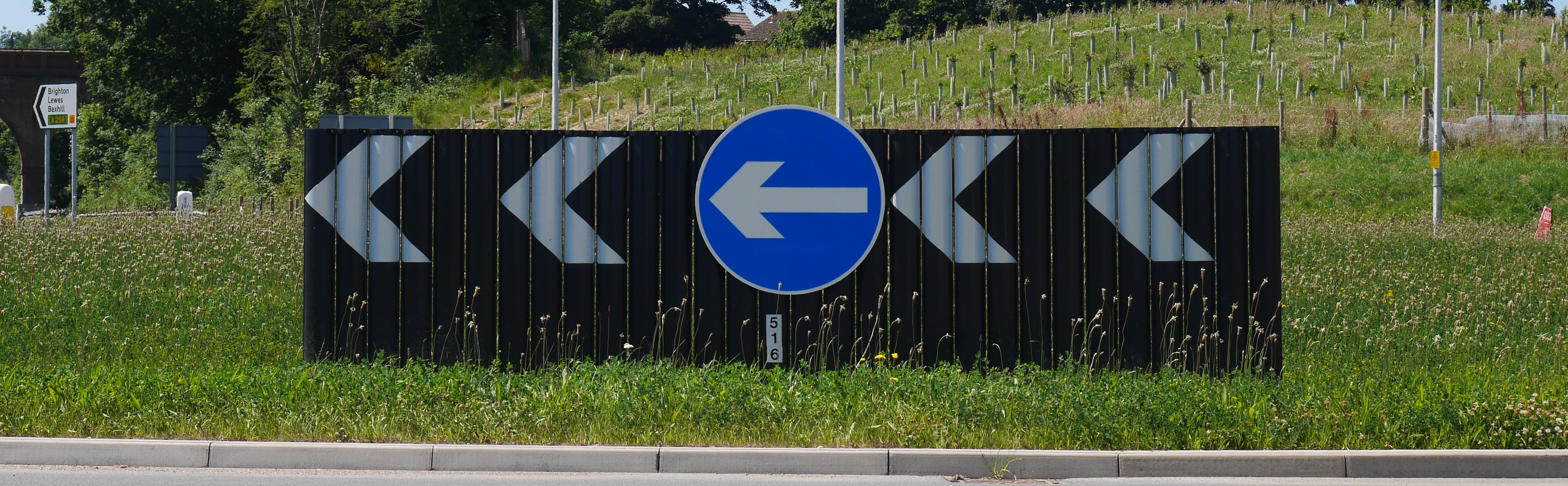
Help improve safety and reduce expenses with this passively safe and approved system, designed for minimising harm to vehicle occupants in the case of an accidental crash – it will collapse upon collision and then return to its original shape. This inherent design for impact energy absorption is a key feature of passive safety. Coupled with a socket system, it can help keep installation and maintenance costs low.
Chevroflex Ultra boasts significantly lower lifetime expenses compared to metal options. Its below-ground socket design allows for blade replacement on an individual basis. It comes with chevron heights of 400mm, 600mm, or 800mm and a customisable selection of sizes and configurations. Chevron visibility should be ideal for drivers to be able to see and react to a hazard in time. Larger chevrons for higher speed roads offer more visibility, especially in bad weather conditions, offering a high amount of passive safety.
Compared to conventional chevron signs, Chevroflex offers improved passive safety and is certified passively safe to BSEN:12767 performance standard 100-NEB. Chevroflex also works in conjunction with a socket system, which allows for a smooth and easy installation and replacement. Lastly, worry not about your chevrons being installed to incorrect legislative heights, with chevrons factory fitted to meet legislation.
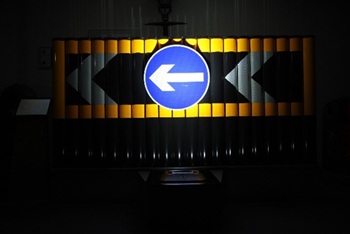
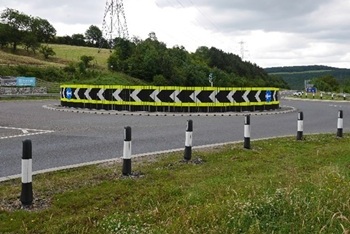
The above images showcase the Chevroflex unit's adaptability for placement and customisable arrangements. The Chevroflex can be arranged in one complete unit to mark the entire perimeter of a traffic island, as shown in the image above. The "wall-effect" that the Chevroflex offers is also highlighted here, ensuring there is no space left below the chevrons which helps draw road users’ full attention.
Discover the Chevroflex Sign System
Apex™ Chevron Sign
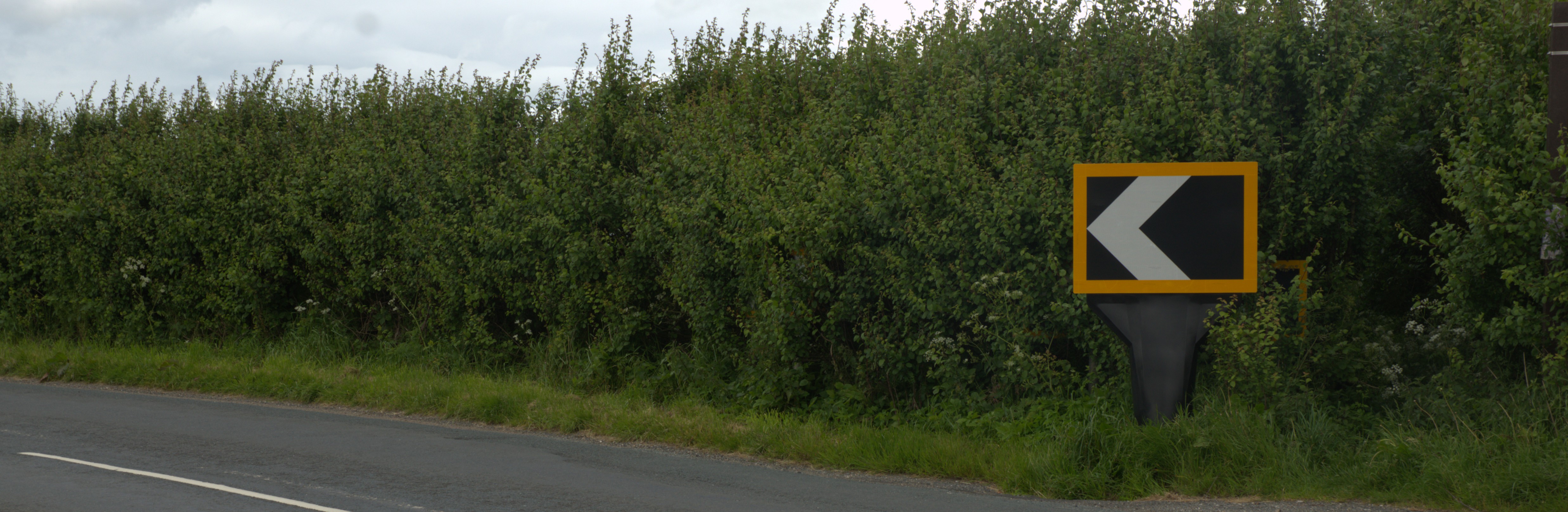
The ultimate and ideal solution for marking sharp bends where verge space is limited. This 600mm sign board has a small footprint design and can function as a single chevron sign or be staggered with multiple Apex signs to indicate the entire bend.
Purpose-built to be interchangeable, the system offers flexibility in placement to accommodate various bend geometries. Additionally, it enables effortless installation or reinstallation through the Apex Lockfast Socket.
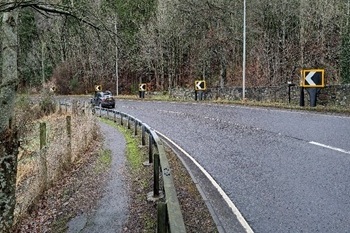

The above images demonstrate the Apex’s capability to highlight entire bends on rural roads and do so significantly, ensuring the full bend of the road is prominently highlighted and offering a high degree of passive safety in the process*. (*Passive testing and approval granted for Apex with socket fixing)
Looking closer at this same scheme, two separate Apex signs have been placed beside each other to signify road users from both directions. This is possible thanks to the product's slim profile, which demonstrates its ability to mark bends where verge space is limited. Marking both directions on one side of the road is a highly advantageous trait that can significantly improve safety and reduce spending costs.
On a different plan, the product's placement and organisation are significantly altered. Here, it is used to forewarn road users of a sharp bend.
Discover the Apex Chevron Sign
Orbital™ Chevron Sign
The unique all-in-one, ready-to-install solution for low-approach-speed roundabouts and highways with speeds less than 50mph. Complete with an integral low-energy LED illuminated 606 sign face and 400mm chevron sign board, Orbital’s consumes less than1 watt of energy and can be specified with socket fixings for ease of removal and maintenance.
This product is a multi-versatile solution to road safety, capable of guiding, indicating speed limits, and marking directions.

The above images display the optimal use of the Orbital. Here, the Orbital effectively draws attention to a small roundabout with low-speed approaches. Its directional sign face and chevron offer smooth navigation around the roundabout. Upon closer inspection, one can observe the impressive functionality of its internally illuminated reflective sign face, which combined with integral chevron sign and socketed options makes this an operationally efficient option from an installation and maintenance point of view. The energy efficient LED’s run at less than 1 watt making Orbital cheap to run.
Discover the Orbital Chevron Sign
Conclusion
Whether it's flexibility, enhanced visibility or innovative design, with help from Chevroflex Ultra™ Sign System, the Orbital Chevron Sign, and the Apex™, Glasdon empowers its customers to make informed decisions, ensuring safer roads for communities and individuals alike.
For more information on our Road Safety Bollards & Equipment, please contact us or speak to a member of our team using our LiveChat service.